
Press releaseNW 1119
The Only On-Demand Jet Charter Broker or Operator That Pays De-Icing Costs for Its Clients: New Flight Charters
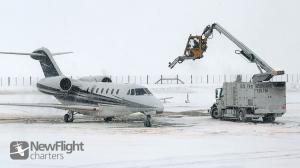
New Flight Charters cover de-icing charges for the seventh year
De-icing and hangar charges covered nationwide up to $2,500 per trip this winter, at no cost to the client, and for the 7th straight year
Other companies will sell you protection against the bill. We just pay it.”
— Rick Colson
JACKSON HOLE, WY, UNITED STATES, November 19, 2026 /EINPresswire.com/ -- When a private jet needs de-icing this winter, most charter flyers will get the bill. New Flight Charters' clients won't. It’s the only on-demand jet charter broker or charter operator in the country that pays its clients' de-icing and hangar charges itself, up to $2,500 per trip, with no added fees, waivers or membership required.
The finding comes from a November 2026 review of publicly advertised de-icing policies across U.S. and international charter brokers, operators, jet card programs and membership programs.
HOW THE REST OF THE INDUSTRY HANDLES DE-ICING CHARGES
De-icing is a federal safety requirement whenever ice, snow or frost is on an aircraft. Because no one knows at booking whether it will be needed, almost every on-demand charter company bills it to the client after the flight. The review found three common approaches, none of which takes the cost off the client:
• Billed after the trip. The standard on-demand model. The FBO bills the operator, and the charge is passed to the client at cost.
• Waivers or insurance sold to the client. Some brokers and operators let charter clients buy a de-icing waiver per flight or per leg. The client is still paying, just upfront.
• Built into jet card and membership rates. Larger jet card and fractional programs include de-icing, but it is prepaid in the hourly rate whether a flight needs it or not. Some cards offer it only as a paid add-on.
New Flight Charters is different. De-icing and hangar costs are paid from a dedicated company reserve. Nothing is added to the quote, and clients don't pay anything extra to be covered.
"We've done this for seven winters now, and as far as we can find, nobody else in on-demand charter does," said Rick Colson, founder and president of New Flight Charters. "Other companies will sell you protection against the bill. We just pay it. Our clients get one price, and that's the price."
WHAT DE-ICING COSTS FOR PRIVATE JETS
A light or midsize jet de-icing typically averages around $2,000. Larger jets, heavy snow or a second treatment can push the bill higher. Costs vary by airport, fluid type, aircraft size and weather. Mountain resorts and ski-town airports like Aspen, Jackson Hole, Telluride, Sun Valley, Eagle/Vail are typically at the high end.
The program applies to every New Flight Charters client charter nationwide this winter season. It sits alongside the company's Best Price Guarantee and final cost guarantee, so flyers know their total trip cost before they fly.
ABOUT NEW FLIGHT CHARTERS
Celebrating 22 years in 2026, New Flight Charters arranges custom domestic and international private jet charter flights for clients nationwide, with top-rated aircraft, a Best Price Guarantee and a perfect safety history.
The company is the most-accredited in the industry, with 12 accreditations including ARGUS® and Wyvern® Registered, BBB A+ rated and accredited, approved by the Air Charter Association, Dun & Bradstreet Gold rated, an Inc. 5000 Honor Roll company and a SAM-registered U.S. government contractor.
For each trip request, New Flight Charters sends a summary of the industry-wide best available options and quotes to review, featuring top aircraft makes and models, including locally based aircraft, floating fleet one-way pricing, and empty legs.
For jet charter quotes, call (888) 701-3843 or visit newflightcharters.com.
FlightCast Media
+1 888-444-1880
Media Contact
Visit us on social media:
LinkedIn
Instagram
Facebook
YouTube
Legal Disclaimer:
EIN Presswire provides this news content "as is" without warranty of any kind. We do not accept any responsibility or liability for the accuracy, content, images, videos, licenses, completeness, legality, or reliability of the information contained in this article. If you have any complaints or copyright issues related to this article, kindly contact the author above.

Write for us
Have something to say about this beat?
Submit an article or do an interview for Airlines & Aviation.
Write for us →