


Adopt SAF Now Pursue Hydrogen Breakthrough
Naveena TadisettyCo-founder & HR Head · UptimeMonitorXOne of the clearest examples of aircraft technology addressing environmental concerns is the development and use of Sustainable Aviation Fuel (SAF). SAF is produced from renewable feedstocks such as waste oils, agricultural residues, or synthetic processes, and according to the World Economic Forum Global Aviation Sustainability Outlook 2026, it can reduce lifecycle carbon emissions by up to 80 percent compared to conventional jet fuel. Airlines including United and Lufthansa have already integrated SAF into their operations, and IATA forecasts global production to exceed 7 billion liters annually by 2030. This makes SAF the most practical near-term solution since it works with existing aircraft engines and infrastructure without requiring major redesigns.
Looking further ahead, hydrogen-powered aircraft stand out as the most promising innovation for sustainable aviation. Airbus has announced plans to introduce a hydrogen-powered commercial aircraft by 2035, and studies published in ScienceDirect highlight hydrogen propulsion as the most scalable long-term solution. Hydrogen has nearly three times the energy density of jet fuel by weight, and when used in fuel cells or burned directly, it produces only water vapor instead of carbon dioxide. This makes it particularly suitable for long-haul flights where battery-electric solutions are impractical due to weight limitations.
While SAF provides immediate emission reductions and is already in use, hydrogen propulsion offers a pathway to truly zero-emission aviation once infrastructure and storage challenges are solved. Together, these innovations represent a dual strategy: SAF as the bridge technology delivering impact today, and hydrogen as the breakthrough that could redefine aviation's environmental footprint in the decades ahead.
Field Hybrid Propulsion on Short Routes
Hybrid-electric propulsion blends jet fuel with electric power to cut burn during the most energy hungry parts of flight. Early models suit short and regional routes where batteries and generators can work together well. As power grids add more clean energy, the climate gains grow over time without changing the plane.
Noise can fall around airports, which also helps local air quality and communities. The shift can use much of today’s airport setup, which keeps costs lower and speeds rollout. Support test programs and clear rules so airlines can deploy hybrid fleets at scale now.
Use AI to Curb Contrail Heat
AI tools can steer flights away from the thin cold layers that form the brightest contrails. Small changes in height or path can prevent ice trails that trap heat, with only a tiny fuel cost. Satellite and weather data can feed models that update in real time for each flight plan.
Airlines can use these tools today without buying new planes or fuel types. Clear methods to measure results will build trust and guide smart incentives. Ask regulators and carriers to adopt contrail programs now and share data so benefits scale fast.
Lightweight Composites Slash Fuel and Waste
Ultra light composite parts let planes carry the same load with less weight, which cuts fuel use on every trip. New plastics that can be reheated and reshaped can be recycled, which lowers waste at the end of life. Strong skins also resist corrosion, which reduces heavy maintenance and saves downtime.
Smart sensors in the structure can spot small damage early, which keeps safety high and repair costs low. Cleaner factories that use clean power can shrink the footprint of making these parts as well. Push for greener composite supply chains and support standards that reward low weight and easy recycling.
Modernize Airspace for Quieter Faster Flights
Modern air traffic tools can guide planes on smoother climbs and descents that burn less fuel and make less noise. Better routes and time based spacing cut holding patterns and long taxi times. Data links between planes and controllers let paths adjust quickly to weather and traffic.
Many of these gains come from software and training, not from building new runways. Cross border rules and aircraft upgrades are still needed so the system works everywhere. Urge governments and industry to fund equipage and harmonized procedures to unlock these fuel savings now.
Embrace Blended Wings for Big Efficiency
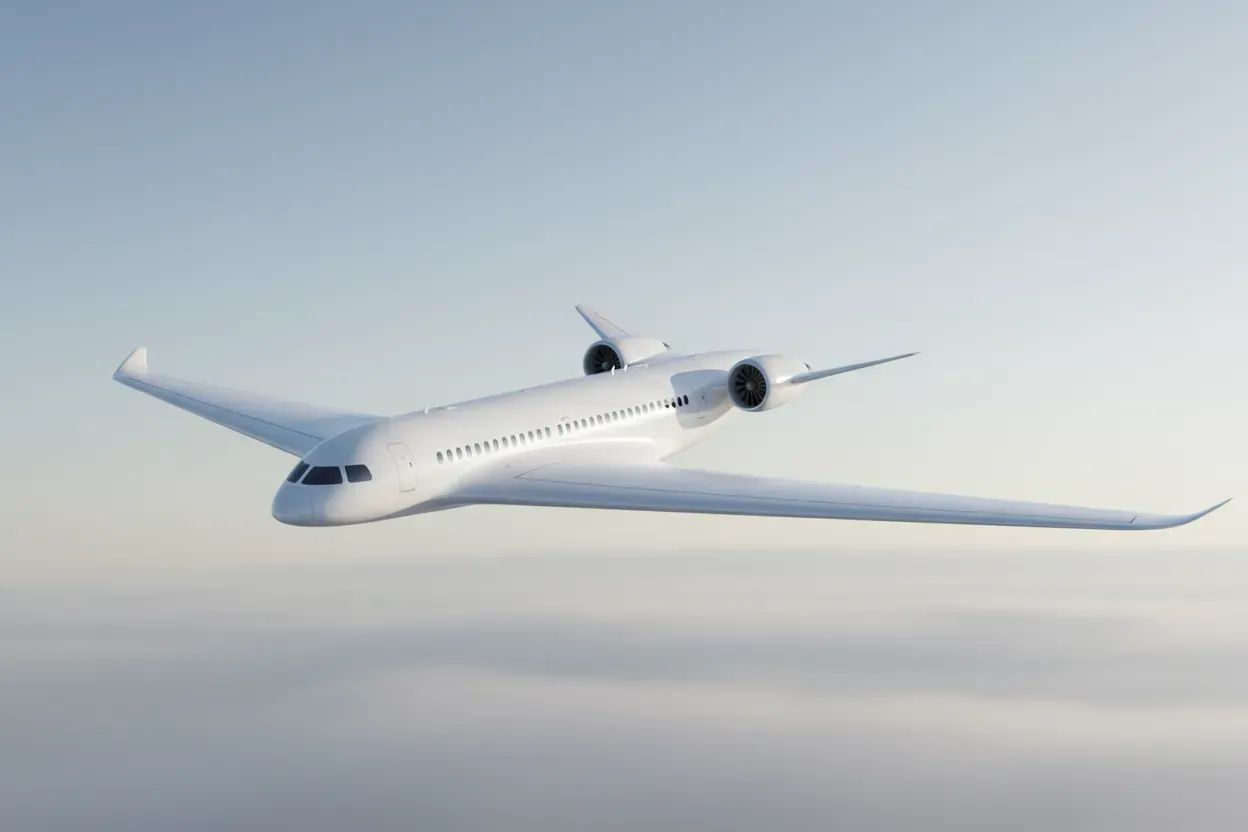
Blended wing body designs promise much lower drag, which means far less energy for the same trip. The wide body can hold more fuel or hydrogen tanks without heavy penalty, opening doors for cleaner energy later. Large cabins and cargo bays can be arranged to keep comfort and range while saving weight.
The shape may not fit every gate or jet bridge, so airports will need plans for loading and safety. The biggest gains come on long routes where small efficiency changes add up fast. Back full scale demos and airport readiness studies to bring this big jump to service.